

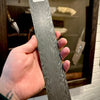
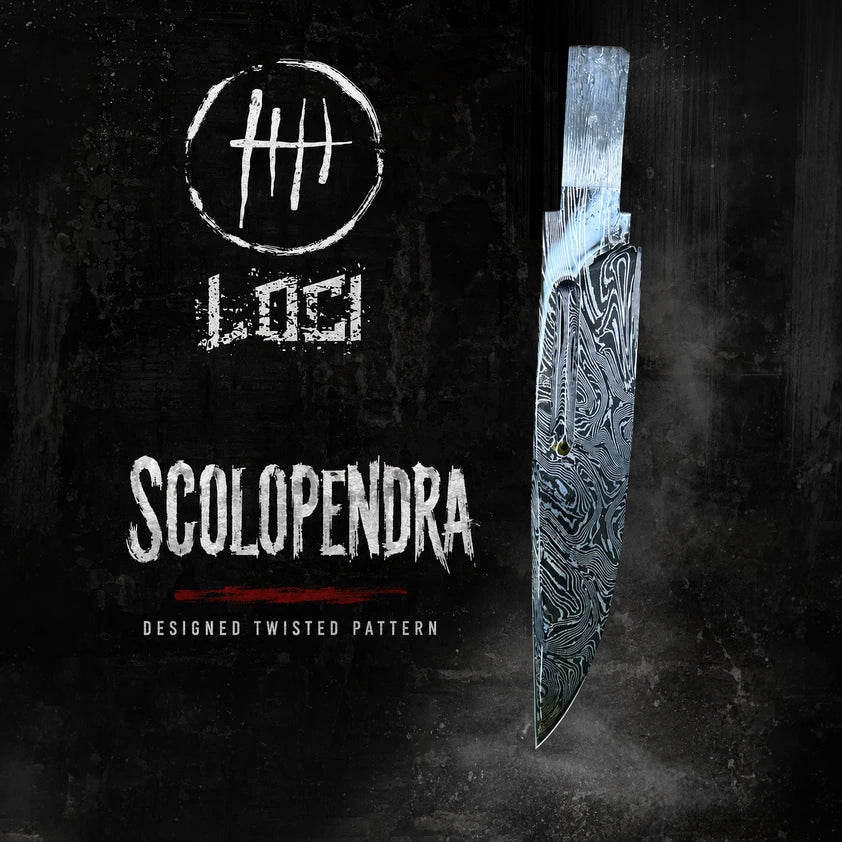
Scolopendra is a carbon pattern-welded damascus billet, made using the combined twisted pattern technique. The pattern is created by combining twisted sections of damascus, resulting in aggressive, dynamic, and organic lines.
This material was created for knifemakers looking for a visually striking, irregular yet controlled pattern. After finishing and etching, Scolopendra offers deep contrast and a distinct, predatory texture, perfect for all sorts of projects.
Each billet is hand-forged, so the pattern may vary slightly between pieces. This is not a defect, but a natural characteristic of true pattern-welded damascus.
Product features
-
Material: carbon pattern-welded damascus
-
Pattern: Scolopendra
-
Pattern type: combined twisted pattern / combination twist
-
Application: knives, jewelry, crafts
-
Pattern characteristics: dynamic, aggressive, organic, highly contrasting
-
Product for artisans: billet intended for further processing, grinding, hardening, and finishing
Technical description:
The billet is supplied as raw material for further work. Before creating the final blade, it requires mechanical processing, appropriate heat treatment, and etching to bring out the proper contrast of the pattern.
Due to hand forging and the nature of pattern-welded damascus, each piece has a unique arrangement of lines. The final appearance of the pattern depends on the blade's geometry, grind depth, etching method, and surface finish.
Why Centipede?
Centipede is a pattern for projects that are meant to attract attention. The combination twist creates a more complex effect than a classic twist — the lines are stronger, more dynamic, and less predictable. This makes the material excellent for knives where the damascus pattern is intended to be one of the main elements defining the character of the entire project.